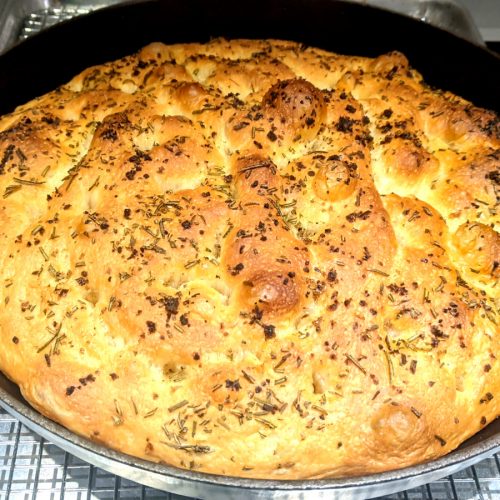
Focaccia might be over 9000 years old, but the method still works because it’s based on physics, fermentation, and a generous amount of olive oil.
This is traditional Focaccia Genovese — airy crumb, crisp bottom, deeply golden crust — made using a high hydration dough and the stretch-and-fold method instead of kneading.
No mixer. No theatrics. Just flour, water, yeast, salt, and olive oil — properly engineered.
If you’ve struggled with dense focaccia, pale crusts, or soggy bottoms, this method fixes all of that.
Why This Focaccia Works
- 79% hydration creates an open, airy crumb.
- Stretch & fold technique develops gluten without kneading.
- Olive oil under the dough shallow-fries the bottom crust.
- High heat baking ensures strong oven spring.
- Maillard reaction creates deep flavor and color.
Bread is chemistry. Focaccia is controlled fermentation.
Focaccia Genovese (High Hydration Method)
Ingredients
- 480 g Tipo 00 pizza flour or bread flour 3¾ cups
- 380 g lukewarm water 1⅔ cups, about 95°F / 35°C
- 6 g active dry yeast 2 teaspoons
- 10 g fine sea salt 1¾ teaspoons
- 50 ml extra virgin olive oil 3½ tablespoons total, divided
- Fresh rosemary
- Flaky sea salt
- Extra virgin olive oil for topping
Instructions
- Add flour to a large bowl.
- Dissolve yeast in lukewarm water.
- Add yeast-water mixture and 1½ tablespoons olive oil to flour. Mix until combined.
- Cover and rest 30 minutes.
- Perform stretch and fold. Cover and rest 30 minutes. Repeat 3–4 times.
- After final fold, rest 30 minutes.
- Coat baking tray with remaining olive oil. Transfer dough and stretch to fill pan.
- Cover and rest 30 minutes.
- Preheat oven to 220°C / 420°F (convection) or 240°C / 465°F (conventional).
- Dimple dough, top with olive oil, rosemary, and flaky salt.
- Bake 20–25 minutes until golden brown.
- Remove from pan immediately and cool before slicing.
Ingredients
Dough
- 480g Tipo 00 pizza flour or bread flour (3¾ cups)
- 380g lukewarm water (1⅔ cups, about 95°F / 35°C)
- 6g active dry yeast (2 teaspoons)
- 10g fine sea salt (1¾ teaspoons)
- 50ml extra virgin olive oil (3½ tablespoons total, divided)
Topping
- Fresh rosemary (or dried rosemary)
- Flaky sea salt
- Extra virgin olive oil
Instructions
1. Mix the Dough
Add flour to a large bowl.
In a smaller bowl, dissolve yeast in lukewarm water.
Add yeast-water mixture to flour along with 1½ tablespoons (21g) olive oil.
Mix until no dry flour remains. The dough will be sticky — that’s correct.
Cover and rest 30 minutes.
2. Stretch & Fold
With wet hands, stretch one side of the dough upward and fold it into the center. Rotate the bowl and repeat until you complete a full circle.
Cover and rest 30 minutes.
Repeat this process 3–4 times at 30-minute intervals.
After the final fold, rest 30 minutes.
This develops gluten structure without kneading.
3. Prepare the Pan
Pour remaining olive oil into your baking tray and coat generously.
Transfer dough into the tray.
With well-oiled hands, gently stretch the dough to fill the pan. If it resists, wait 5 minutes and continue.
Cover and rest 30 minutes.
4. Preheat Oven
- Convection oven: 220°C / 420°F
- Conventional oven: 240°C / 465°F
5. Dimple & Top
Drizzle more olive oil over the dough.
Press your fingers deeply into the surface to create dimples.
Top with rosemary and flaky sea salt.
6. Bake
Bake 20–25 minutes until golden brown.
Remove from the pan immediately and cool on a rack for at least 10 minutes before slicing.
The Result
Crispy olive-oil fried bottom.
Soft, elastic interior.
Open irregular crumb.
Deep golden crust.
Nine thousand years later — still perfect.
Variations
- Onion focaccia (Liguria style)
- Cherry tomato focaccia
- Sweet focaccia with sugar crust
- Olive focaccia
Frequently Asked Questions
Why is my focaccia dense?
Likely under-fermented or too much flour added during handling.
Why is the bottom soggy?
You didn’t remove it from the pan immediately after baking.
Can I cold ferment it?
Yes. After the final fold, refrigerate 12–24 hours for deeper flavor.
You may also like this
Ciabatta Bread Recipe (Easy Homemade Italian Slipper Bread)
German Leberkäse Meets Pizza: The Ultimate Fusion Recipe
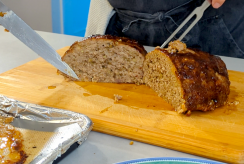
German Meatloaf with Lentils & Apple BBQ Glaze — Frugal, Juicy & Delicious
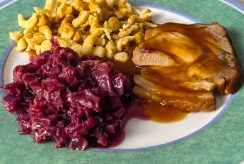
Forget Green Bean Casserole – Try This German Holiday Side Instead: Apfelrotkohl from Scratch