Ciabatta bread recipe, easy homemade ciabatta, Italian slipper bread, no-knead ciabatta, ciabatta buns recipe — this classic Italian loaf delivers bakery-quality results with minimal ingredients and surprisingly little effort. With its airy open crumb, crisp crust, and exceptional sandwich performance, ciabatta has become one of the world’s most beloved artisan breads.
In this guide, you’ll learn how to make authentic ciabatta from scratch using a simple folding technique that replaces traditional kneading. You’ll also shape the dough into two versatile forms: a rustic ciabatta loaf and individual sandwich buns perfect for panini.
The Story Behind Ciabatta
Ciabatta is a relatively modern bread. In 1982, Italian miller and former race-car driver Arnaldo Cavallari created it as Italy’s response to the growing popularity of French baguettes. He wanted a bread that could rival baguette sandwiches while showcasing Italian flour and baking traditions.
The name ciabatta translates to slipper, referencing the bread’s flat, elongated shape. Despite its rustic appearance, ciabatta is carefully engineered: high hydration produces its signature open crumb, while folding builds structure without aggressive degassing.
Why Bake Ciabatta at Home?
Many bakeries market ciabatta as premium artisan bread — often at premium prices. Yet its ingredient list reveals a frugal reality:
- Flour
- Water
- Yeast
- Salt
- Sugar
Making ciabatta at home not only saves money but also delivers superior freshness, crust texture, and flavor complexity from extended fermentation.
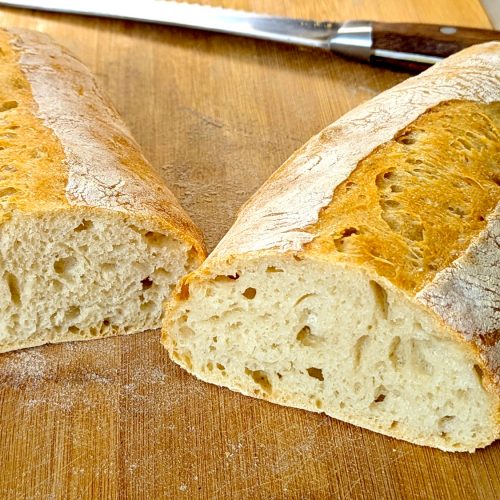
Easy Homemade Ciabatta Bread
Ingredients
- 400 g all-purpose flour
- 1 tsp sugar
- 1 tsp salt
- 5 g fresh yeast or 1¾ tsp instant yeast
- 270 ml lukewarm water
Instructions
- Mix flour, sugar, salt, yeast, and water until a sticky dough forms.
- Cover and ferment for 2 hours until bubbly.
- Fold dough twice, rest 30 minutes, fold again, rest 15 minutes.
- Preheat oven to 240°C (465°F) and prepare baking sheet.
- Shape loaf, proof 30 minutes, bake 22 minutes.
- Alternatively divide into 6 buns, proof 30 minutes, bake 15 minutes.
Version 1: Classic Ciabatta Loaf
- Gently stretch dough into a ~30 cm (12 in) loaf.
- Transfer to baking sheet and dust with flour.
- Cover and proof 30 minutes.
- Bake about 22 minutes until golden.
- Cool on rack.
Version 2: Ciabatta Buns
- Shape dough into a rectangle and lightly flatten.
- Divide into 6 portions.
- Transfer to baking sheet and proof 30 minutes.
- Bake about 15 minutes.
- Cool on rack.
Why Ciabatta Is Perfect for Panini
Ciabatta’s structure makes it ideal for pressed sandwiches:
- Open crumb: absorbs sauces without sogginess
- Thin crisp crust: holds shape under pressure
- High hydration: maintains tenderness after grilling
It’s equally suited for olive oil dipping, bruschetta, and hearty deli sandwiches.
Storage Tips
- Room temperature: 1–2 days in paper bag
- Freeze: slice and freeze up to 2 months
- Refresh: reheat briefly in hot oven for crust revival
Final Thoughts
Ciabatta proves that exceptional bread does not require complexity — only understanding. With minimal ingredients and a folding-focused method, you can produce bakery-quality loaves at home while saving money and gaining control over flavor and texture.
Once you master ciabatta, an entire world of high-hydration artisan breads opens before you.
You may also like this
German Leberkäse Meets Pizza: The Ultimate Fusion Recipe
German Meatloaf with Lentils & Apple BBQ Glaze — Frugal, Juicy & Delicious

Forget Green Bean Casserole – Try This German Holiday Side Instead: Apfelrotkohl from Scratch
Chicken Marsala Without Cream – A Lighter Homemade Classic